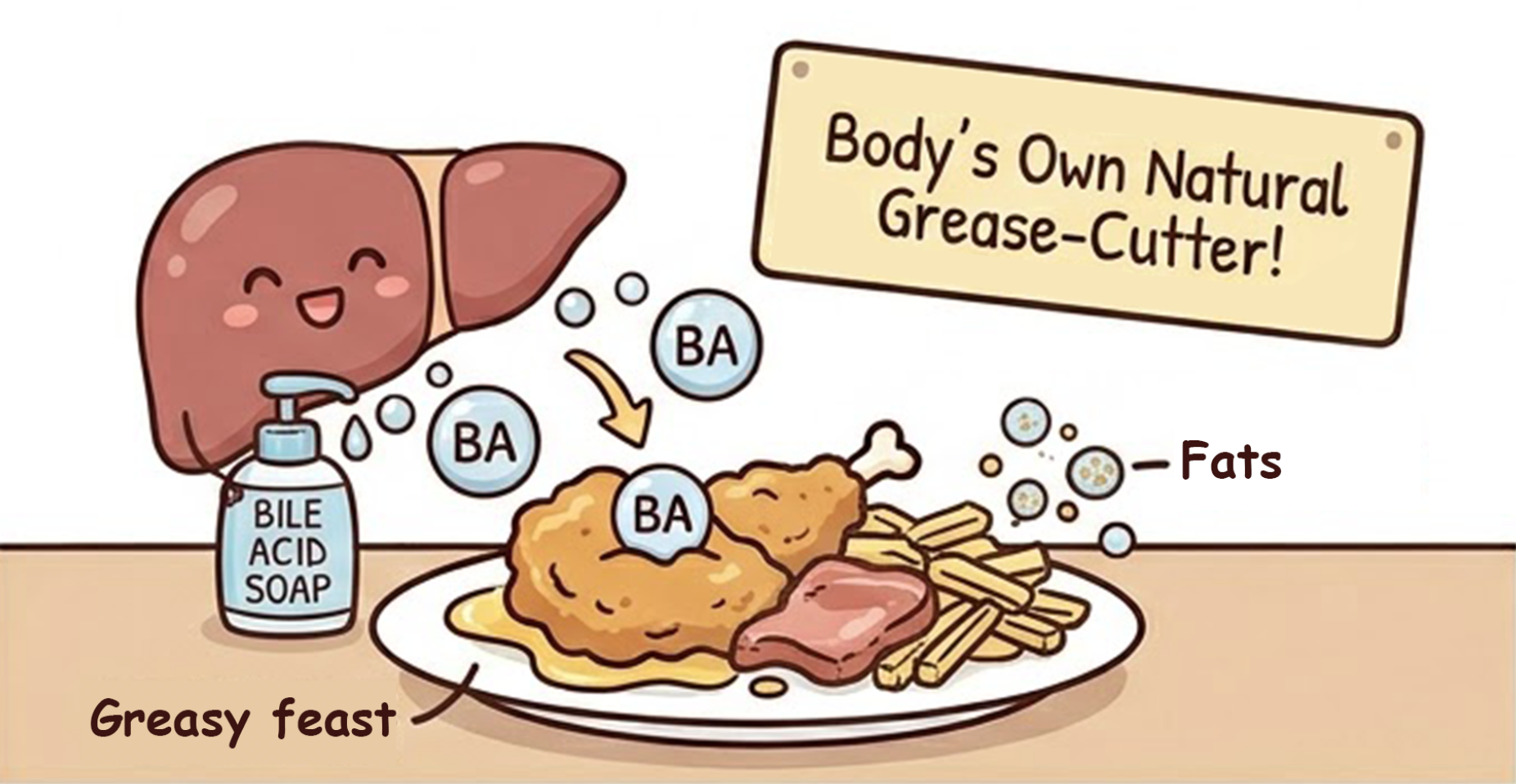
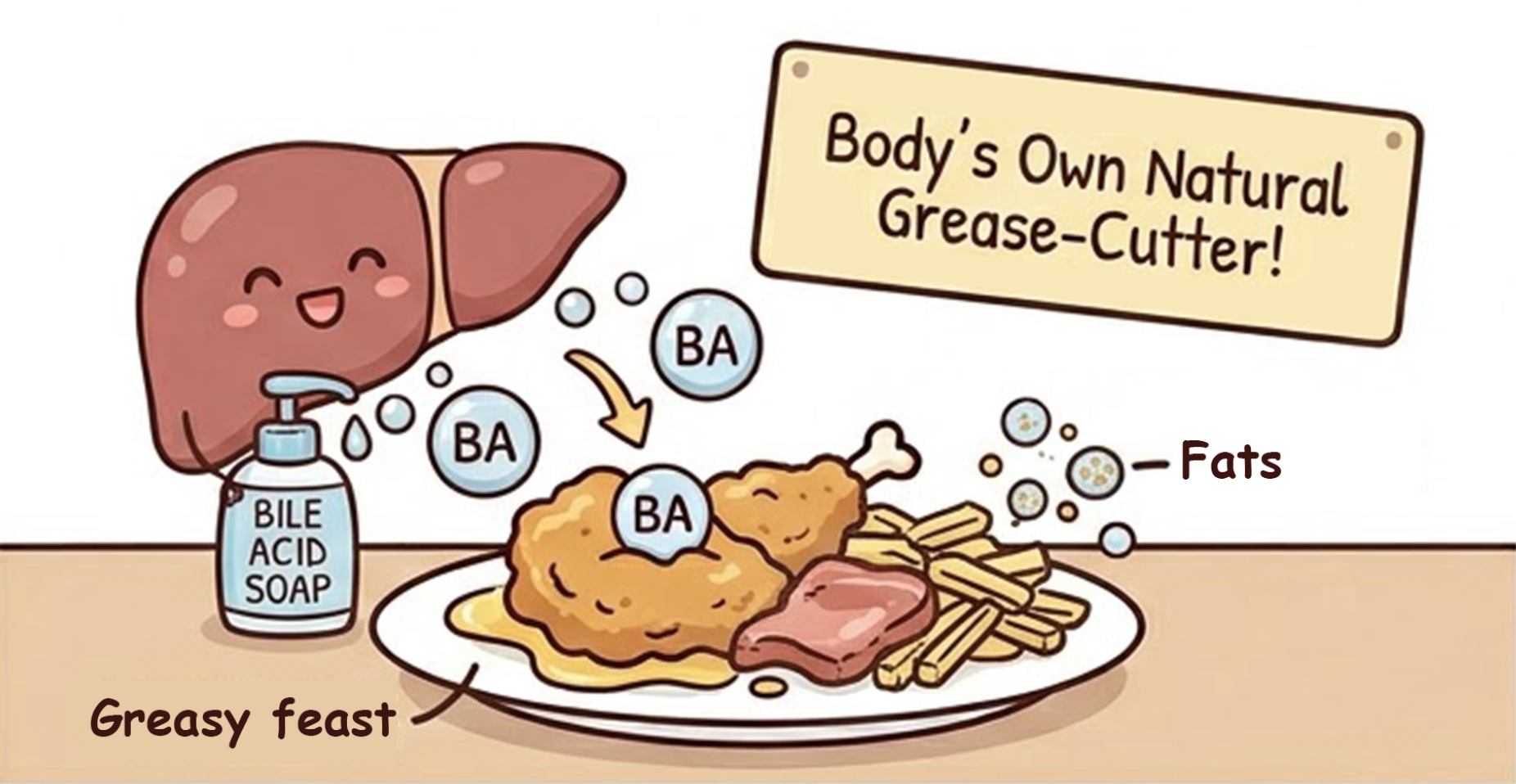
Imagine if you had to buy a brand-new bottle of dish soap every single time you washed a plate. It would be a logistical nightmare and a total drain on your wallet. Fortunately, the human body is far more resourceful. Our liver produces a natural degreaser called Bile Acid(BA) to break down fats from that Sunday roast or late-night burger. To avoid waste, the body has evolved a high-tech recycling loop that salvages over 95% of these precious molecules.
Recently, a team led by Professor Xiaoguang Lei at Peking University published a breakthrough in the journal Nature. For the first time, they’ve mapped out the "design blueprints" for one of the most critical parts of this recycling plant: the OSTα–OSTβ transporter.
The '2+2' Elite Recovery Squad
For years, the exact look of this cellular "exit door" remained a mystery. Using state-of-the-art Cryo-EM technology—think of it as a super-zoom camera that can see individual atoms—the researchers captured the door in high definition.

Unlike most proteins that work solo, this door is a "2+2" elite squad.
The Porters (OSTα): Two muscular core units form the main gateway.
The Brackets (OSTβ): Two sturdy anchor units wrap around the outside, making sure the whole rig stays rock-solid while embedded in the busy cell membrane.
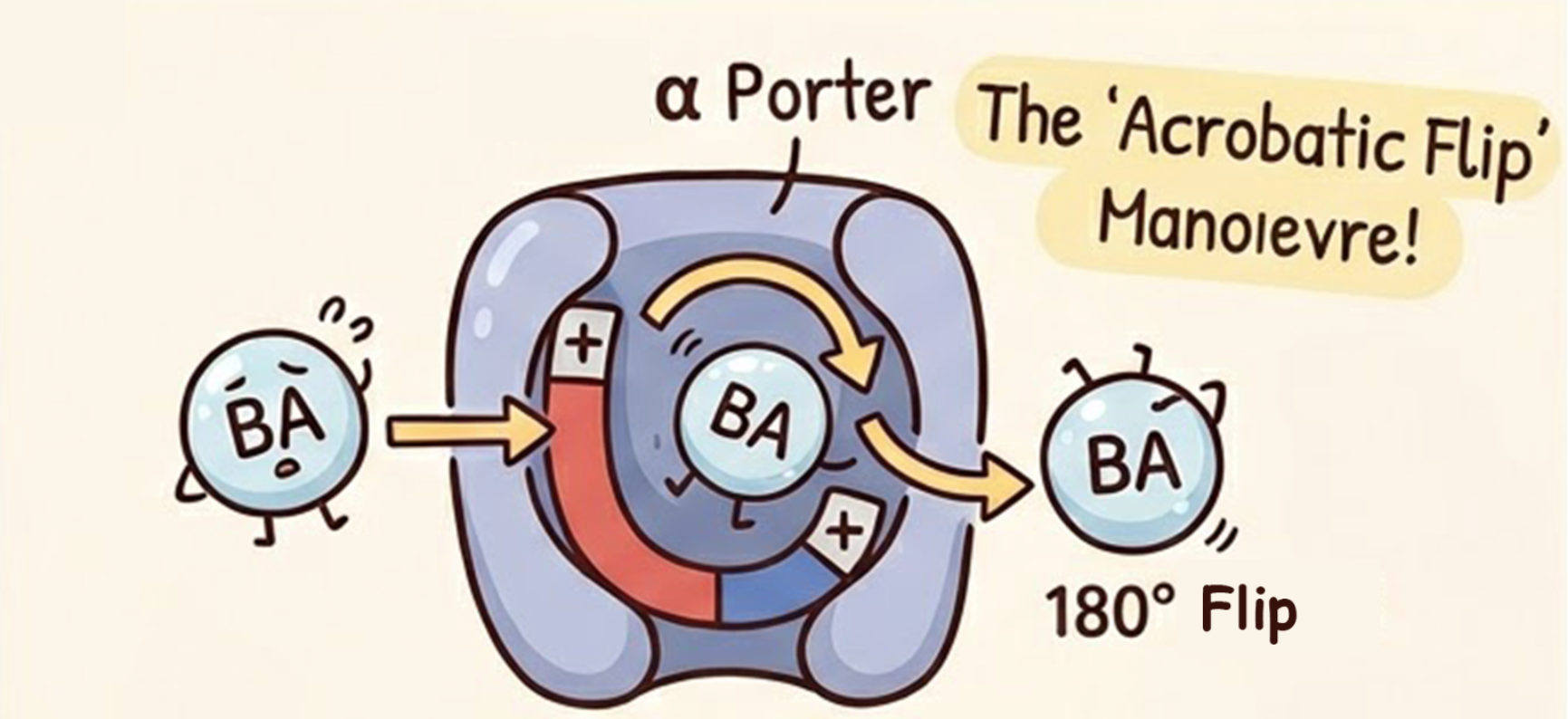
The Gymnastic Flip
The most surprising discovery was how the door actually works. As a negatively charged bile acid molecule enters the gate, it is snared by a positive magnetic field inside.
The molecule doesn't just slide through; it performs a graceful 180° gymnastic flip. This "Acrobatic Manoeuvre" ensures the recycling is both lightning-fast and incredibly energy-efficient. The machine doesn't even need "batteries" (cellular energy); it simply lets the molecules slide down a concentration gradient like a playground slide.
Opening Doors for New Medicine
This isn't just a win for curiosity; it’s a massive step for medicine. When this recycling door gets "rusty" or jammed due to genetic glitches, bile acids build up in the liver, leading to painful metabolic diseases or liver failure.
Now that we have the HD map of every gear and spring inside the machine, drug hunters can design "molecular keys" to fix broken gates.
"This discovery provides us with a precise blueprint to design more effective treatments for liver and metabolic conditions," says Professor Xiaoguang Lei.
*Images created by Gemini