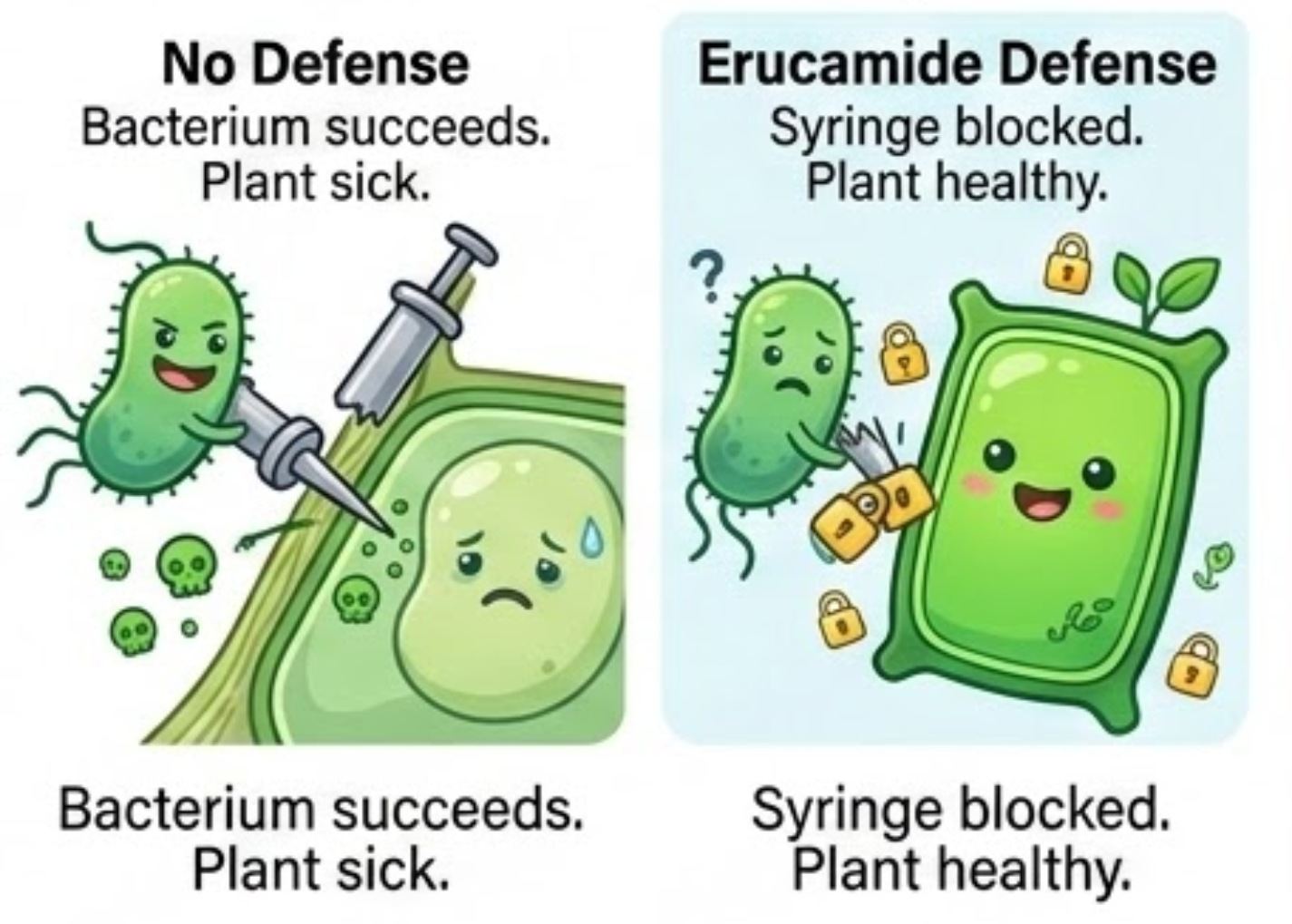
Scientists have discovered a natural compound that acts like a molecular lock, jamming the machinery of bacterial warfare. Unlike traditional antibiotics, this strategy doesn’t kill the invaders—it simply takes away their weapons.
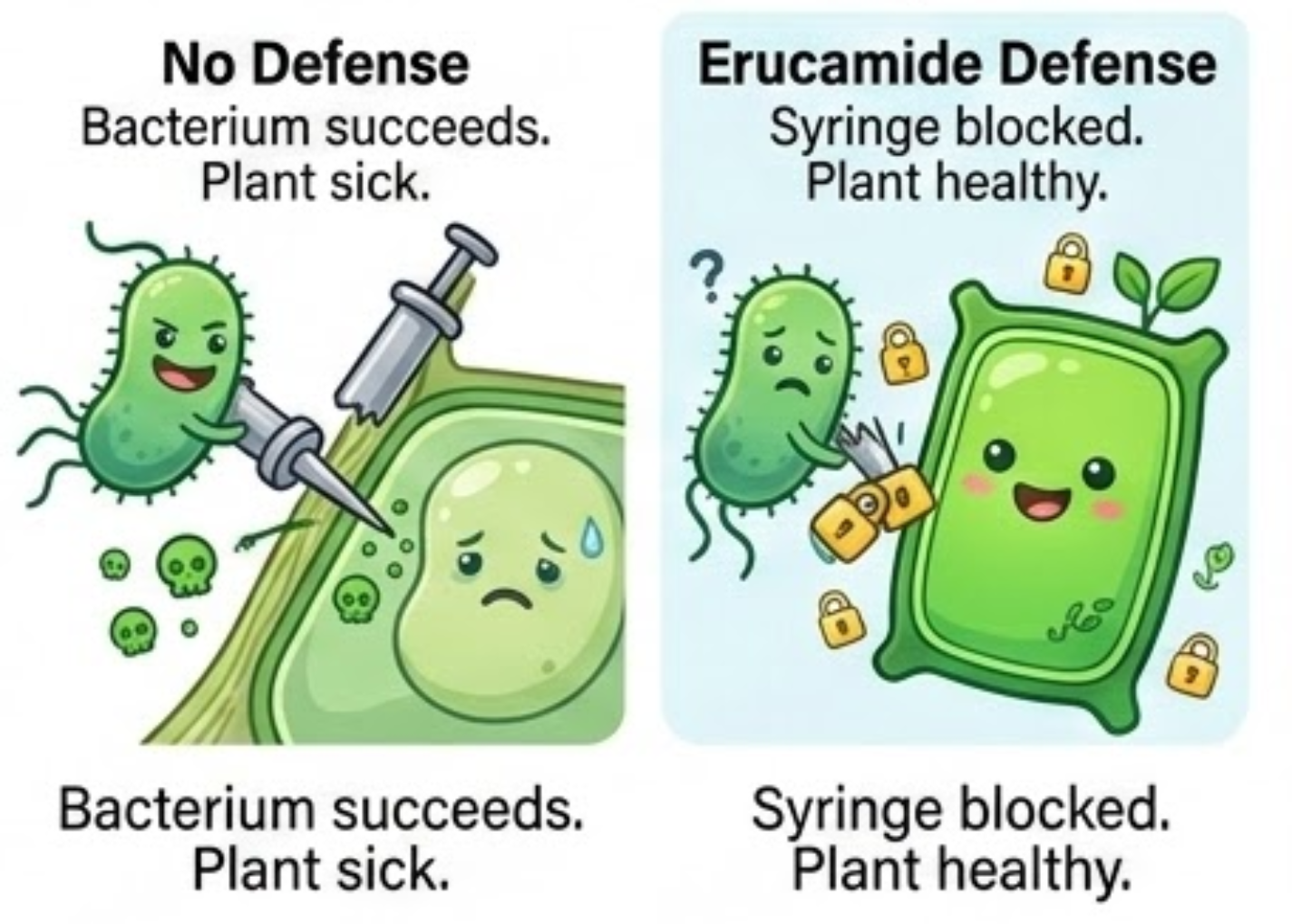
*Made by Gemini
In the microscopic world beneath our feet, a biological arms race is constantly unfolding.
For decades, the standard human response to crop-destroying bacteria has been seek-and-destroy. But as we’ve seen with the rise of antibiotic-resistant superbugs, bacteria are experts at fighting back. When you try to kill them, they evolve to survive.
However, a breakthrough study published in the journal Science by teams from Peking University and the Chinese Academy of Sciences reveals that plants have a far more sophisticated strategy: peace through disarmament.
The Microscopic Syringe
To understand the discovery, you first have to look at how bacteria bully their way into a plant.
Many deadly bacteria don’t rely on brute force. Instead, they use a piece of precision engineering that scientists call a molecular syringe (or the Type III Secretion System).
This needle is tens of thousands of times thinner than a human hair. The bacteria use it to pierce the plant’s cell walls and inject toxins—much like a doctor giving a jab. Once these toxins are inside, they hijack the plant's immune system, leaving the crop to wither and rot.
The Secret Weapon: Erucamide
Researchers found that when plants sense a threat, they produce a specific compound called Erucamide.
This substance is surprisingly common; it’s found in everything from the tomatoes in your salad to the wheat in your bread. But its effect on bacteria is anything but ordinary. In the lab, Erucamide didn’t act like a poison. It didn't kill the bacteria or even stop them from growing.
Instead, it had a much more specific target.
Throwing a Spanner in the Works
Using high-tech cryo-electron microscopy—essentially taking ultra-HD snapshots of molecules—the team saw something remarkable.
Erucamide acts like a molecular lock. It seeks out a specific puzzle piece (a protein called HrcC) that the bacteria need to build the base of their syringe.
"You can think of it like throwing a handful of sand into the gears of a precision watch," one researcher explained.
By clogging up this single component, Erucamide prevents the entire syringe from being assembled. Without their needles, the bacteria are left disarmed. They might still be present on the plant, but they’ve lost the ability to cause any harm. They are transformed from deadly invaders into harmless loiterers.
Why Is This a Game-Changer?
This discovery is causing a stir in the scientific community for three main reasons:
1. The Superbug Solution: Because Erucamide doesn’t kill the bacteria, it doesn't create the evolve-or-die pressure that leads to antibiotic resistance.
2. Greener Farming: Since this is a natural compound already found in our food, it paves the way for a new generation of eco-friendly bio-pesticides.
3. Universal Protection: Because this defense mechanism is found in so many different crops, it could be used to protect a vast range of global food supplies.
The Future of the Dinner Plate
This research offers a new blueprint for the future of agriculture. In the coming years, we may move away from drenching fields in harsh chemicals, instead helping plants use their own chemical locks to stay safe.
As the study shows, sometimes the most effective way to win a fight isn’t to destroy your opponent, but to make their weapons utterly useless.