Abstract
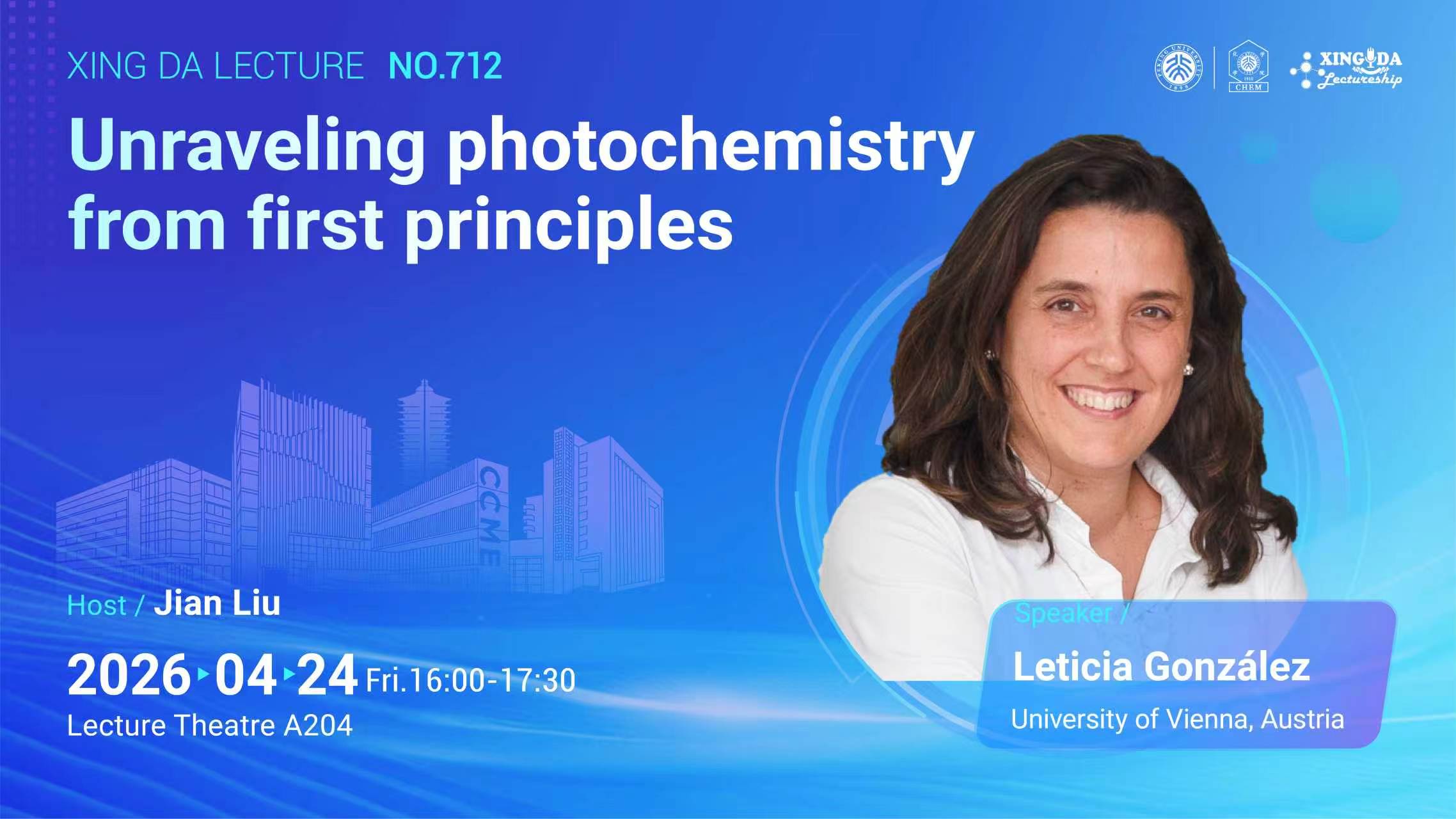
Understanding how molecules respond to light requires disentangling a complex interplay of electronic structure, nuclear motion, and environment. In this lecture, I will present how first-principles approaches, including stationary electronic structure calculations, Marcus theory, and nonadiabatic simulations can be used to unravel the mechanisms governing photochemical and photophysical processes across different molecular systems, from isolated chromophores to molecules embedded in complex environments. Selected examples will include unravelling isomerization mechanisms in photoswitchable molecules and photophysical relaxation pathways in organic or metal-containing molecules. Emerging computational strategies, including data-driven approaches, can also assist in exploring complex photochemical landscapes and extending the reach of first-principles methods. Together, these examples will illustrate how a unified theoretical framework is able to provide fundamental understanding of light-induced processes and guiding principles for the design of photoactive systems.
Biography
Prof. González is currently the vice head of the Institute of Theoretical Chemistry within the Faculty of Chemistry, at the University of Vienna. Her current research focus is put at using highly accurate electronic structure methods, developing molecular reaction dynamical methods and interfacing both fields to achieve basic understanding of chemical processes and structure-function relationships as well as obtain quantitative predictions in molecules, biological systems and materials. Born in 1971 in Madrid, she graduated in Chemistry at the Universidad Autónoma de Madrid, Spain, and obtained her PhD with honors in Chemistry in 1998. In 1999 she moved to the Free University Berlin (Germany) as a postdoctoral research and obtained her Habilitation and venia legendi in 2004. She was appointed Professor at the Friedrich-Schiller-University of Jena (Germany) in 2007 and full Professor at the University of Vienna (Austria) in 2011. She received many honors, among them the Dirac Medal from the WATOC, the Prize for Excellence of the Spanish Royal Society of Chemistry and an Honoris Causa doctorate by the University of Lorraine, she is full member of the Austrian Academy of Sciences and corresponding member of the Göttingen Academy of Sciences and Humanities in Lower Saxony and has hold many named Lectures. She is author of more than 400 publications, she has delivered over 200 invited lectures all over the world and serves as a reviewer and advisor for numerous international journals and funding agencies.



 北大化学微信