

Peking University & University of Manchester Coordination Chemistry Reviews: New Progress in the Adsorptive Removal of PFAS by Porous Materials.
A collaborative review by Prof. Sihai Yang (Peking University) and Prof. Martin Schröder (University of Manchester) has been published in Coordination Chemistry Reviews. The article systematically examines the adsorptive removal of per- and polyfluoroalkyl substances (PFAS) using materials ranging from conventional activated carbons and ion exchange resins to emerging metal-organic frameworks (MOFs) and covalent organic frameworks (COFs).
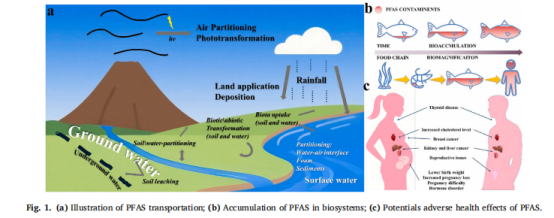
PFAS, known as "forever chemicals" due to their extreme environmental persistence, pose significant health risks. While adsorption remains a key treatment method, conventional sorbents face limitations in capacity, kinetics, and selectivity.
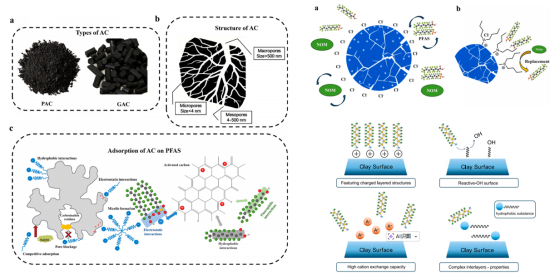
In this review, the authors comprehensively evaluate the adsorption performance of various porous materials for PFAS such as conventional activated carbon, Ion exchange resins and Mineral materials. Especially, the review highlights the advantages of MOFs and COFs, which offer ultra-high surface areas, tunable pore structures, and multiple interaction mechanisms (e.g., electrostatic, Lewis acid-base, hydrophobic/fluorophilic). Key design principles summarized include:
·Mesoporous structures facilitate rapid PFAS mass transfer and mitigate pore blockage.
·Introduction of amine groups, quaternary ammonium groups, or open metal sites can significantly enhance electrostatic interactions and Lewis acid-base coordination, particularly beneficial for removing short-chain PFAS.
·Construction of hydrophobic or fluorophilic microenvironments can strengthen affinity for perfluorocarbon chains, enhancing selectivity.
·Defect engineering and post-synthetic modification can create more binding sites without compromising specific surface area.
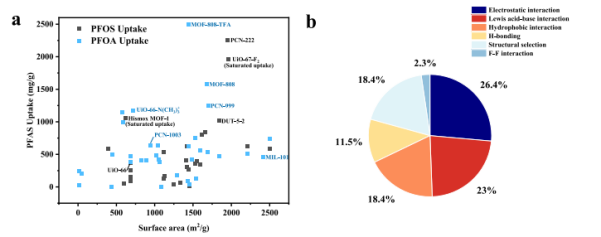
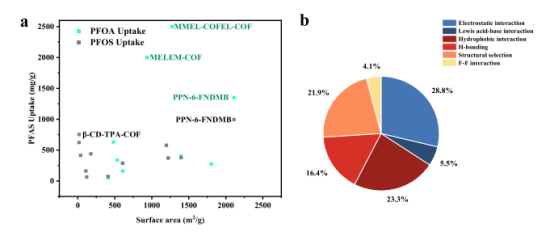
Future directions emphasize the need for realistic evaluation systems, synergistic pore design, long-term stability assessment, and life-cycle analysis to bridge the gap between laboratory research and practical application.